

This post was originally written in Spanish, and translated by the author.
The scenario
Situate yourself as the main planner in a metro area of 300,000 inhabitants in southeast Mexico. There are ongoing efforts from the national government to construct a brand new regional train that will connect your city with the wider region. In an effort to improve the connectivity of the new stations, they make 220 million USD available for you to invest in urban mobility projects for the metro area. What would you do with it?
For those unfamiliar with Mexico, that amount is usually reserved for only the largest metro areas in the country, completely unheard of for a metro area that small.
A stream of wrongful decisions
The city of Campeche in southeast Mexico faced this scenario in recent years, but one wrong decision after another meant that a historical investment ended up being a complete waste of resources.
Let's dive in…
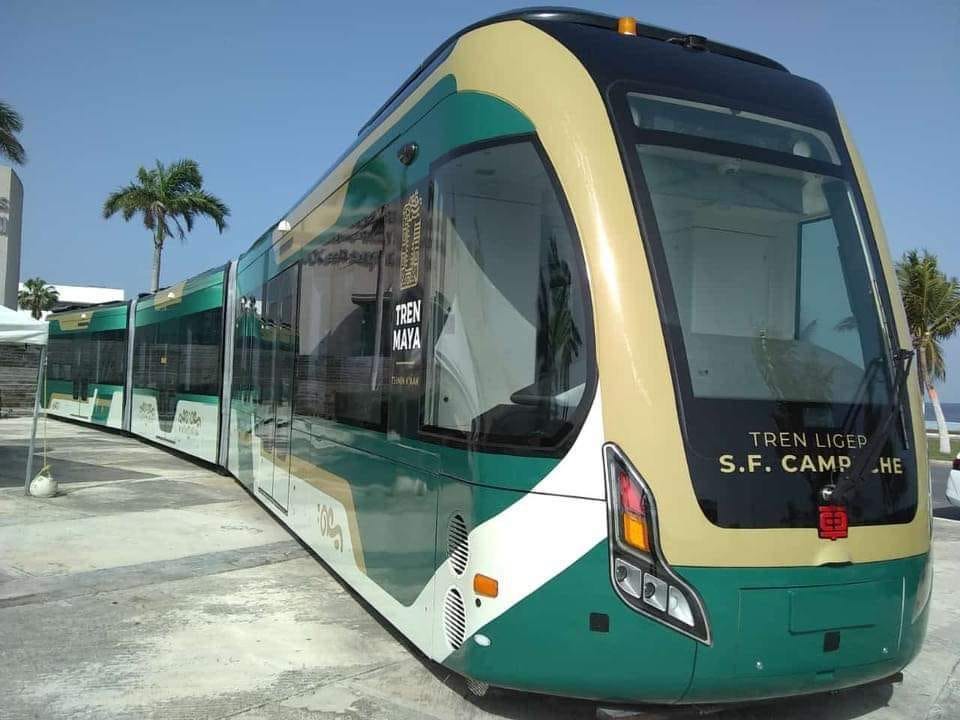
A BRT dressed up as a LRT
Every single post I read about Campeche’s glorious LRT, I can’t help but lament it.
An investment of 220 million USD (4,200 million Mexican pesos) going straight down the drain. An amount that, in a city like Campeche, would have been enough to turn urban transportation upside down, to completely reshape the city itself. That was an unheard-of investment for a metro area of 300,000 inhabitants in Mexico.
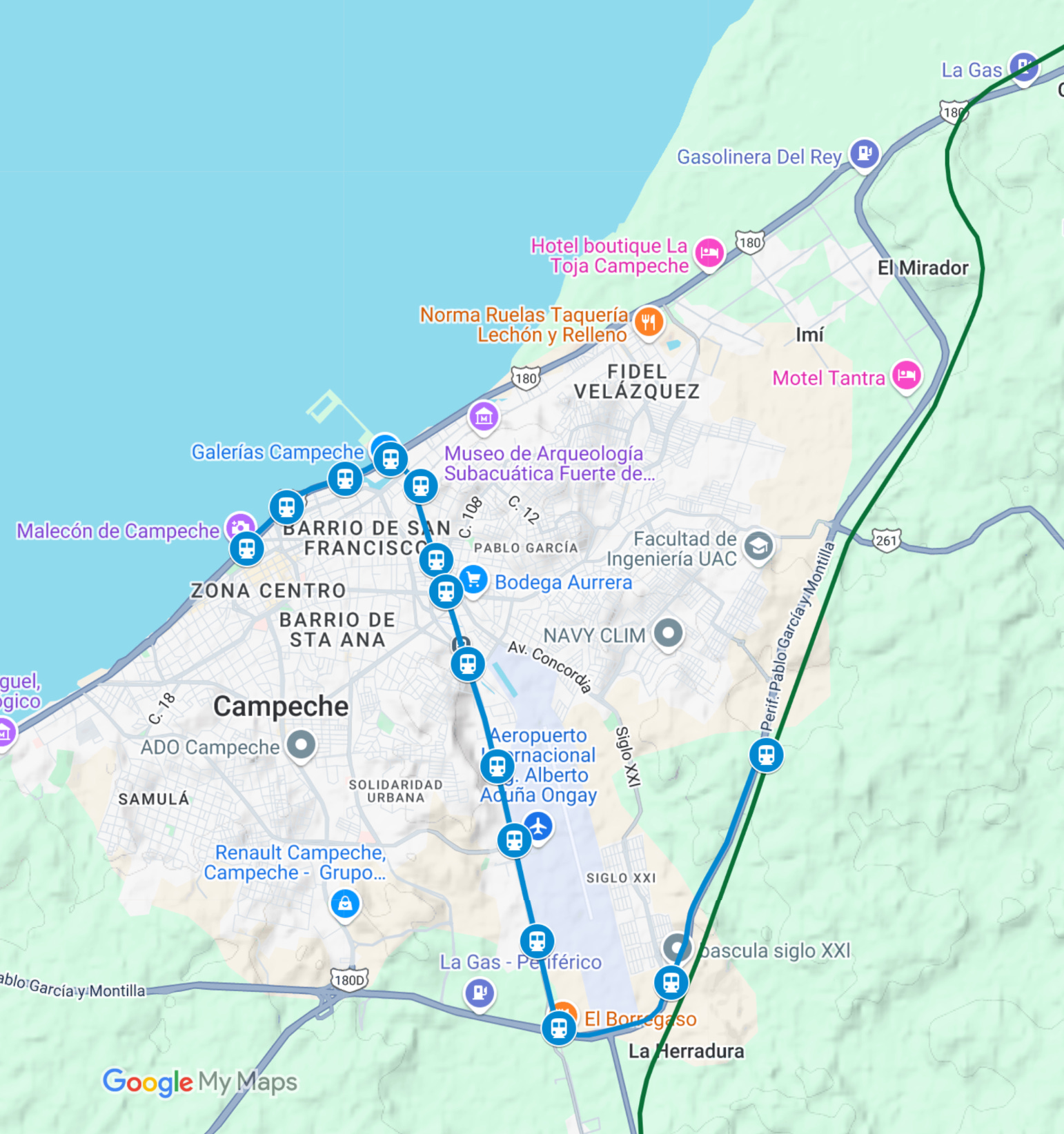
But what is the actual issue with this LRT?
Its not even a train!
We are actually talking about a BRT (that is dressed up to look like a train), somewhat similar to the Metrobus in Mexico City.
By itself, that would only be a branding issue, a marketing gimmick. But the problem goes deeper: this historical investment only offers 10 complete trips per direction per day, with some additional trips covering just a shorter portion of the line.
The service pattern is, frankly, quite confusing. However, the fact that there are more trips on weekends than on regular weekdays suggests that the system is catering more to tourists than to actual residents.


On a side note, the poor design of the schedule information sheet reflects a complete lack of care. It's ugly and hard to read.
If we do the math, the investment per daily round trip comes out to around 22 million USD. Absolute madness.
An outrageous investment for a transit system that supports barely any frequency, something that in any other city would just be a special bus service. It wouldn’t even qualify as a regular one.
The evidence points out that the Light Rail/BRT is failing to attract trips, even lowering fares (Don’t even get me started on fare integration)
Its impact on the urban mobility of Campeche (if we are being optimistic) compared to a regular BRT project in Mexico City.
Post by Osvaldo Alejandro explaining this further (available in Spanish)

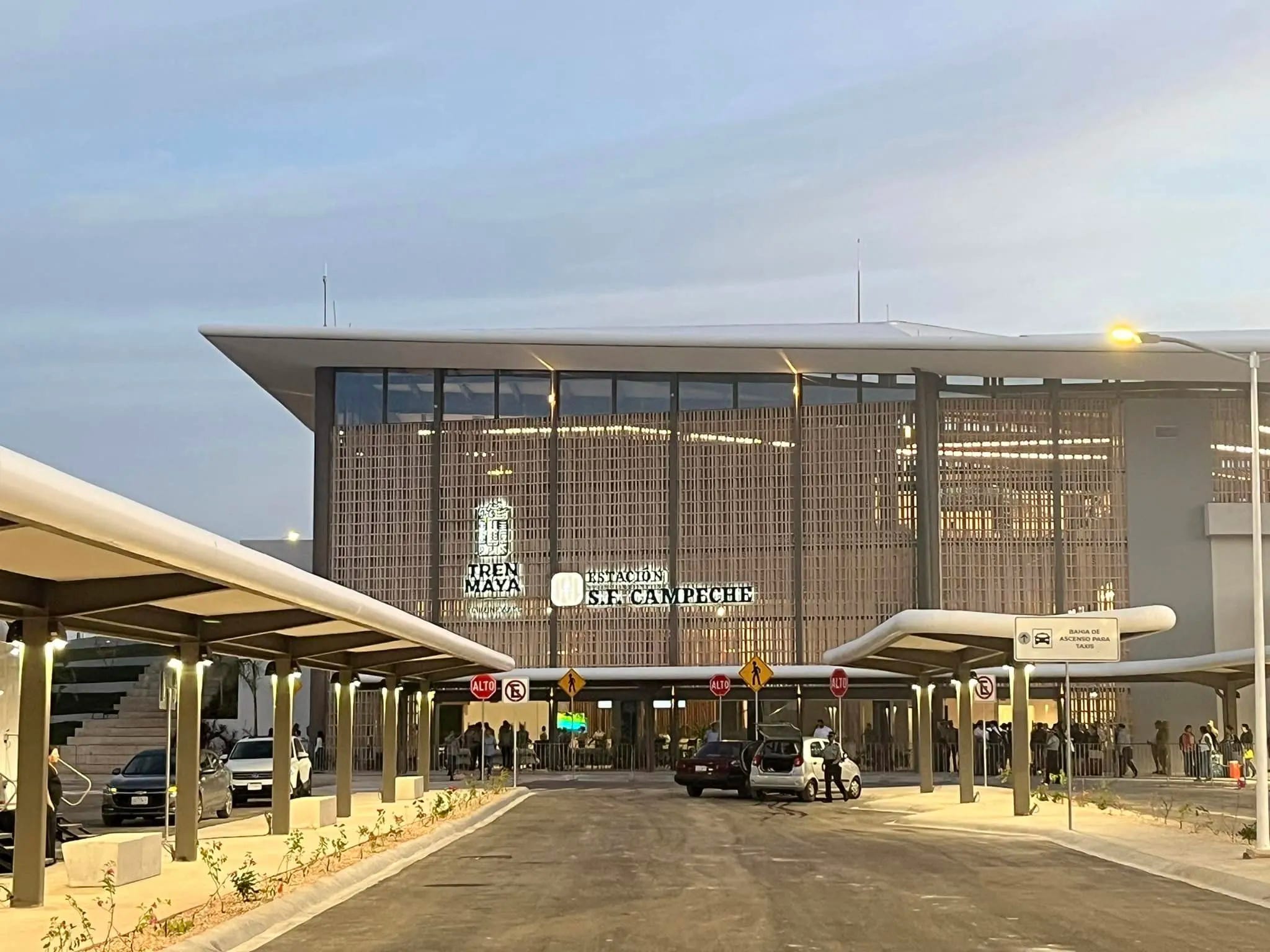
An isolated Tren Maya and the bus-based regional transportation system
If we look at how regional transportation in Campeche works, we find two options. On one hand, we have the new Tren Maya (which is also struggling and has low frequencies); on the other, intercity buses, most of them operated by ADO, a familiar sight to anyone who has traveled to southeastern Mexico.
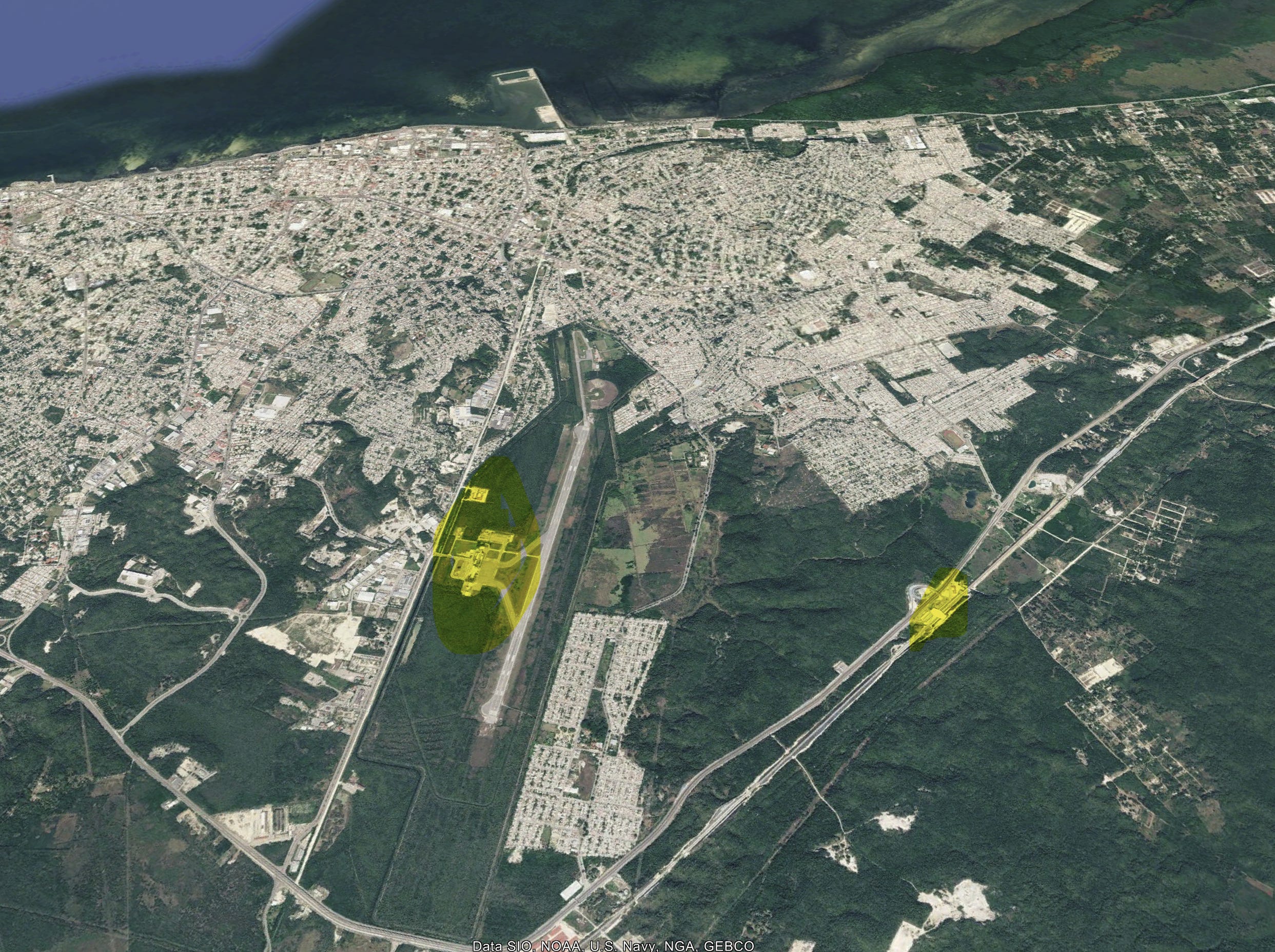
Despite the Tren Maya being brand new, planned and built from scratch on mostly new right-of-way, Campeche’s station was built far outside the city, without any transit connection or a clear plan for how people would access it without using taxis or cars.
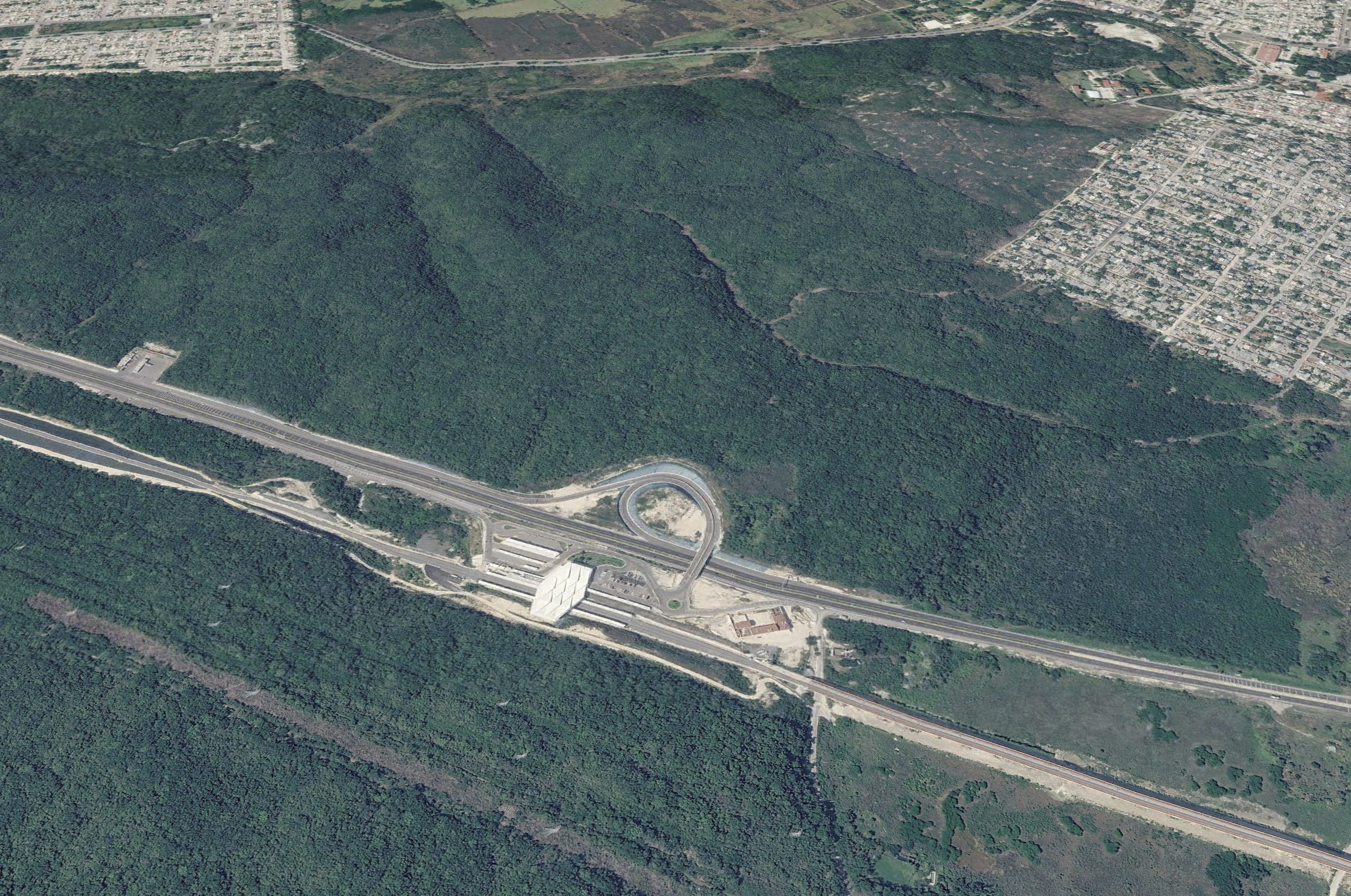
What could have been the epicenter of highest regional connectivity for Campeche and its surrounding region was completely squandered, amounting to nothing more than an isolated transport terminal.
I know there were several issues that impacted the final location of the station and the rail right-of-way, but there was simply no need to build it in the middle of absolutely nothing, where nobody would find it particularly useful.
The forgotten airport
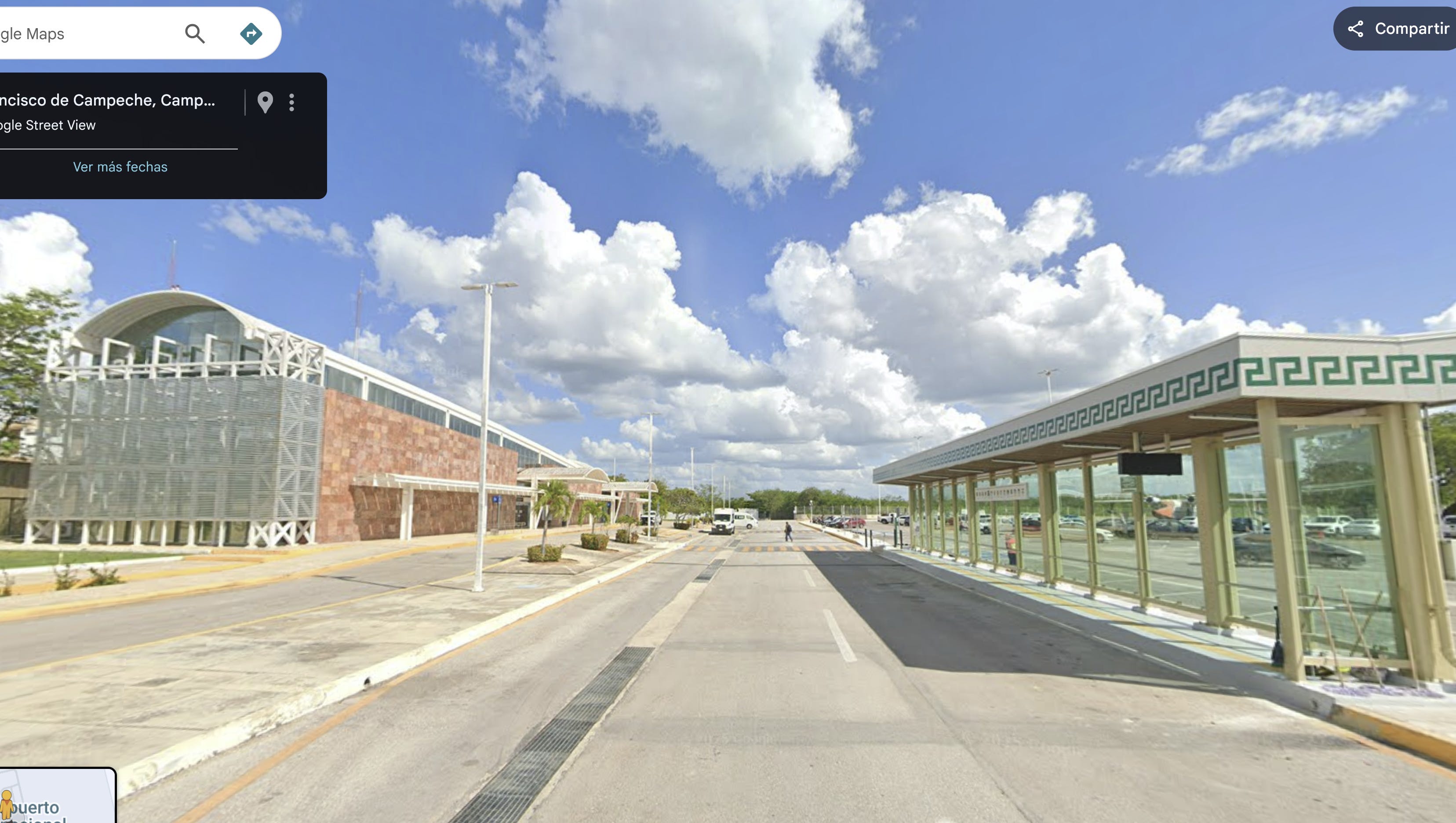
Lastly, there is Campeche’s International Airport (IATA: CPE), connecting the city at both national and international scales.
Nowadays, the airport only sees 15 weekly flights to both Mexico City airports (MEX and NLU), and demand would hardly justify any increase in frequencies any time soon. Maybe in the future a direct flight to Tijuana or a Texan hub such as Houston or Dallas might be a possibility, but compared to similarly sized cities, those 15 weekly flights are actually remarkable.
The LRT does have a station serving the airport, but again, with scattered frequencies, that connection is unreliable at best.
The missed opportunities
So this is what I’m actually saying, what I want to re-frame:
What would happen if we concentrated every transportation facility into a single maximum-access point for urban, regional, national, and international transportation in Campeche?
Instead of a fragmented transportation network, we could integrate it and make transfers seamless, from the local to the international. And no, I’m not proposing anything revolutionary, just common sense. But we keep getting it wrong in Mexico.
Imagine this scenario: you come from a smaller town in the area and arrive at the bus terminal in Campeche, where a seamless connection is available to a more frequent Tren Maya, or to catch a flight to Mexico City, where you’re just one transfer away from 100+ destinations in over 30 countries.
What kind of opportunities would this alone generate for all Campechanos and their businesses? For tourism and regional economic integration?
That’s what infuriates me, an unique opportunity to drive regional growth turned into nothing (Actually is worse because of the excessive subsidies these services require to operate).
So I decided to draft my own conceptual proposal, same budget of 220 million USD, though it could realistically be done for less.
The proposal
A central transportation hub
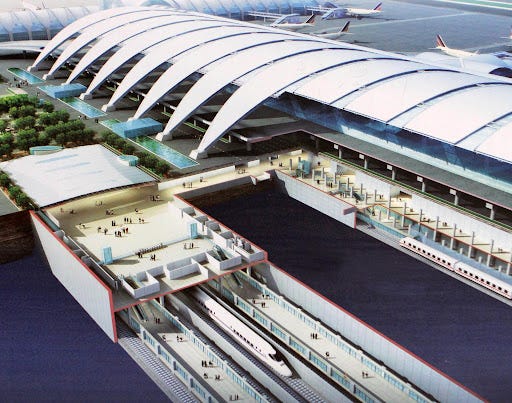
Everything would revolve around a central transportation hub, with plenty of space to keep developing and strengthening it.
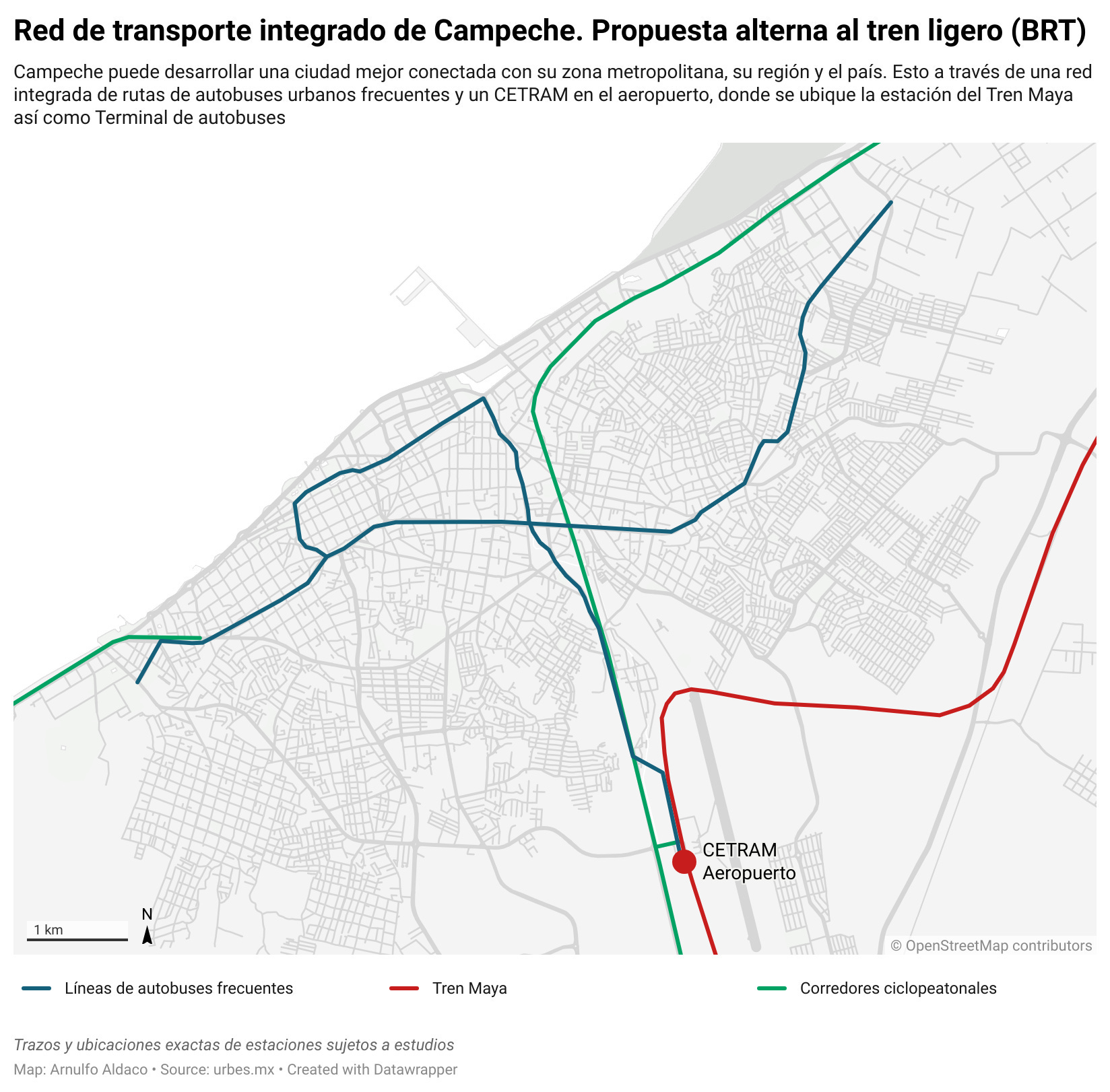
Just across from the airport terminal, we would build an integrated Maya Train and intercity bus station. The project would also include a local bus terminal, a central parking facility, and a secure bike parking structure connected to a Dutch-style network of segregated cycling paths.
We would call this project CETRAM Campeche - standing for Center of Transportation Transfer (Centro de Transferencia Modal in Spanish). We’d definitely want some marketing people involved in the branding, but this works for the purposes of this post.
This would guarantee the intermodality and seamless connections we’ve been talking about. And given Campeche’s tropical climate, all transfers could be made within climate-controlled spaces, or even naturally comfortable ones, if the right architectural project is developed.
This would be the neuralgic point of the city: maximum access and transportation connectivity at every scale.
High frequency urban transit
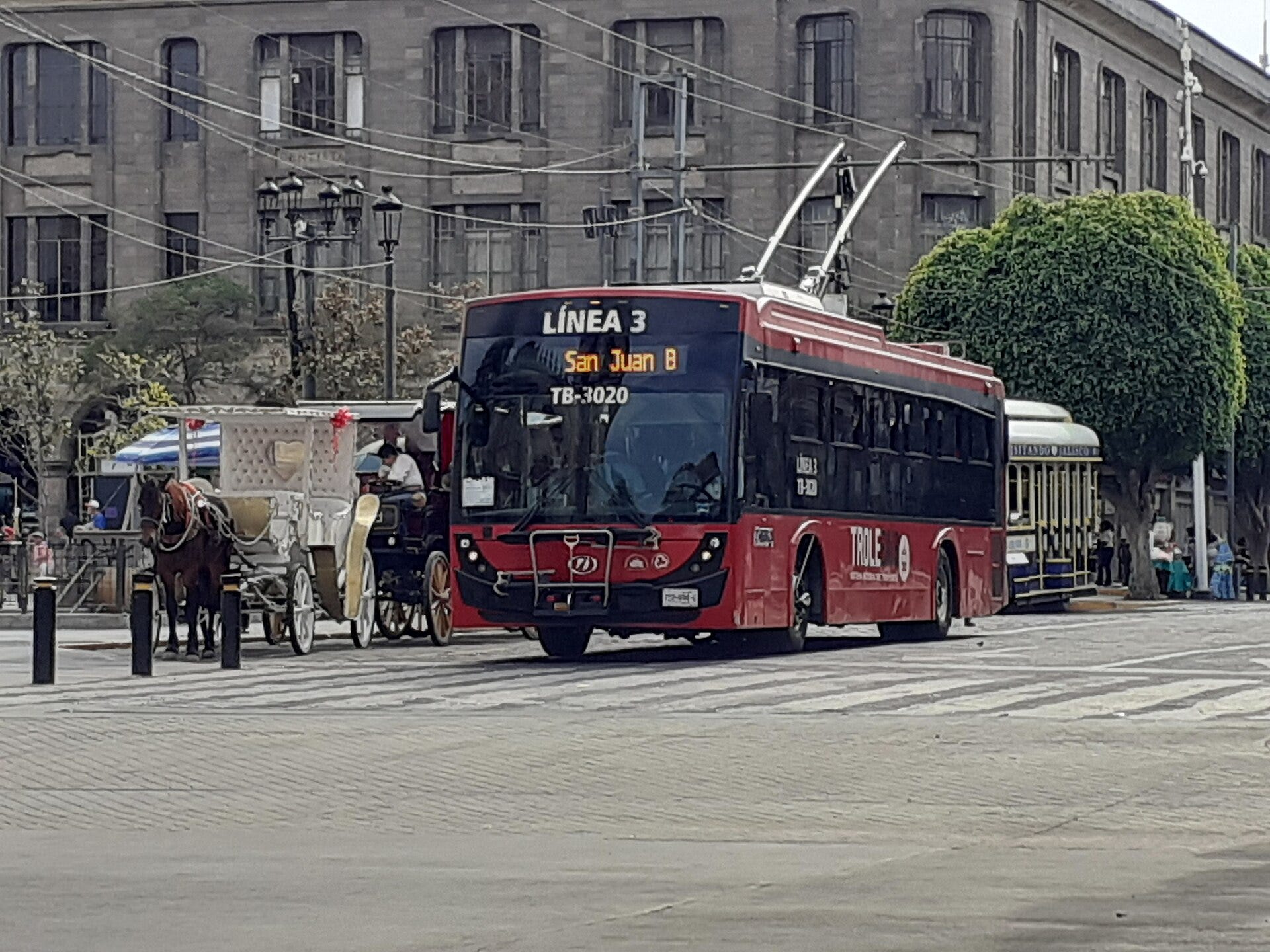
Next, an urban network of high frequency busses would be in implemented. Not exactly BRT, but with some infrastructure in place:
Only bus lanes, guaranteeing speed and reliability of the service
Minimum 15 minutes all day all time frequency, the next bus is always about to get there. This following Jarret’s Walker thesis.
Average stop distances of 800 m. (0.5 miles)
Average operating speed of at least 20 km/h (12.5 miles per hour)
This might be achieved with some nice and new trolleybuses, more efficent than battery buses, and with highly appreciated AC.
My proposal contemplates two main trunk lines.
The first one, from the city center straight to the south, ending in our CETRAM Campeche.
The second one east to west, improving the urban connectivity and with a transfer to the other line close to the city center.
You could go from one tip of the city to the other in less than 30 minutes and minimal wait time.
Obviusly, fare integration is in order. As is a complete redesign of the cities urban buses network, but this would be the backbone.

Self-generating trip demand
All this network integration would generate a relatively high volume of trips to our CETRAM Campeche as the central hub of the city, enough to support high frequencies all day, every day.
There is simply no comparison to the scattered service of the current LRT.
This higher, concentrated demand solves a fundamental problem in urban transportation. It’s not just about the capital cost of a project, it’s about generating enough demand to sustain a high-frequency system.
What can we do with the old train right-of-way?
As a consequence of building new right-of-way for the Tren Maya, the old train tracks, already out of use and no longer needed for any future system, could be repurposed. This is especially compelling given that they run across town and connect directly to our CETRAM Campeche.
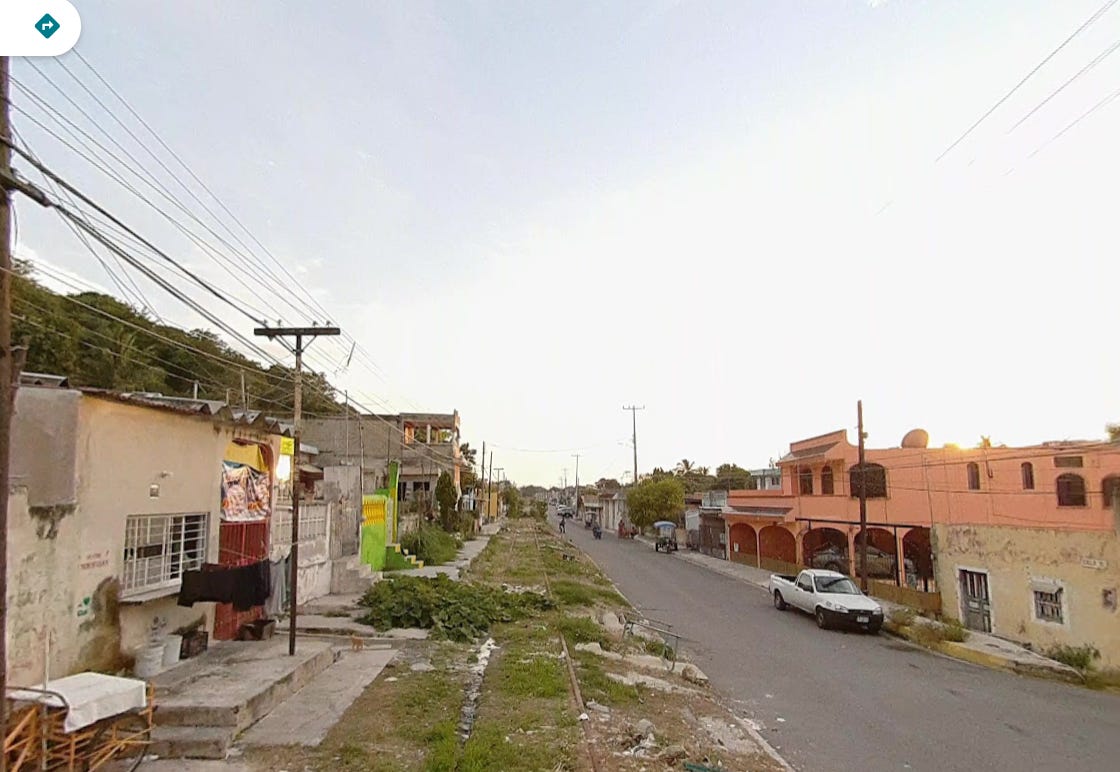
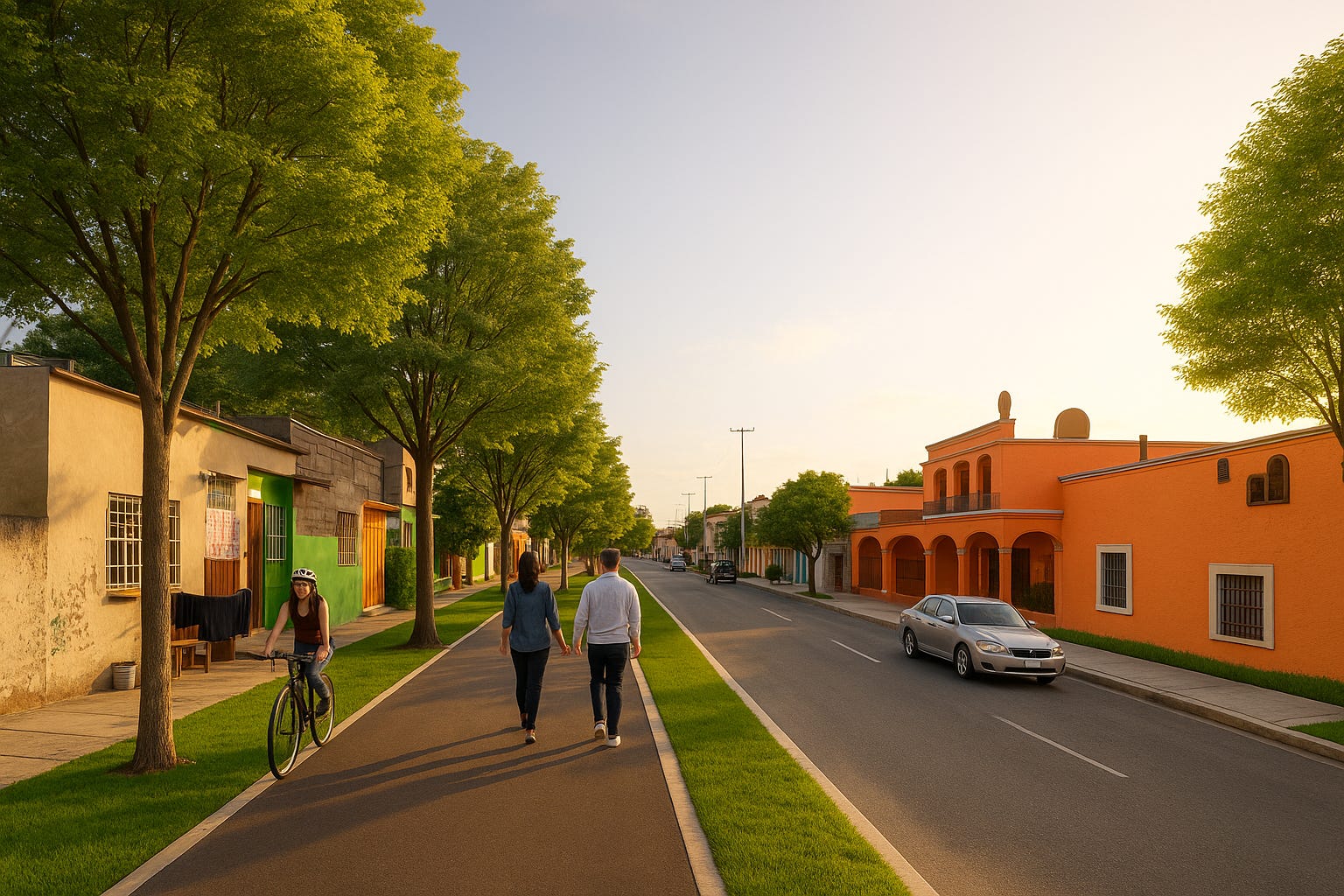
This right-of-way could become the backbone of a walk-and-ride network for Campeche. These paths, lined with trees for shade and protected from motor traffic, would offer easy, comfortable, and convenient walking and cycling opportunities, while also providing connections to our high-frequency urban bus network.
This project could stand entirely on its own, and it would completely transform both the look and the mobility of Campeche.
Airport city: a driver for economic development
Finally, returning to the area surrounding CETRAM Campeche, there’s plenty of space to do something truly meaningful.
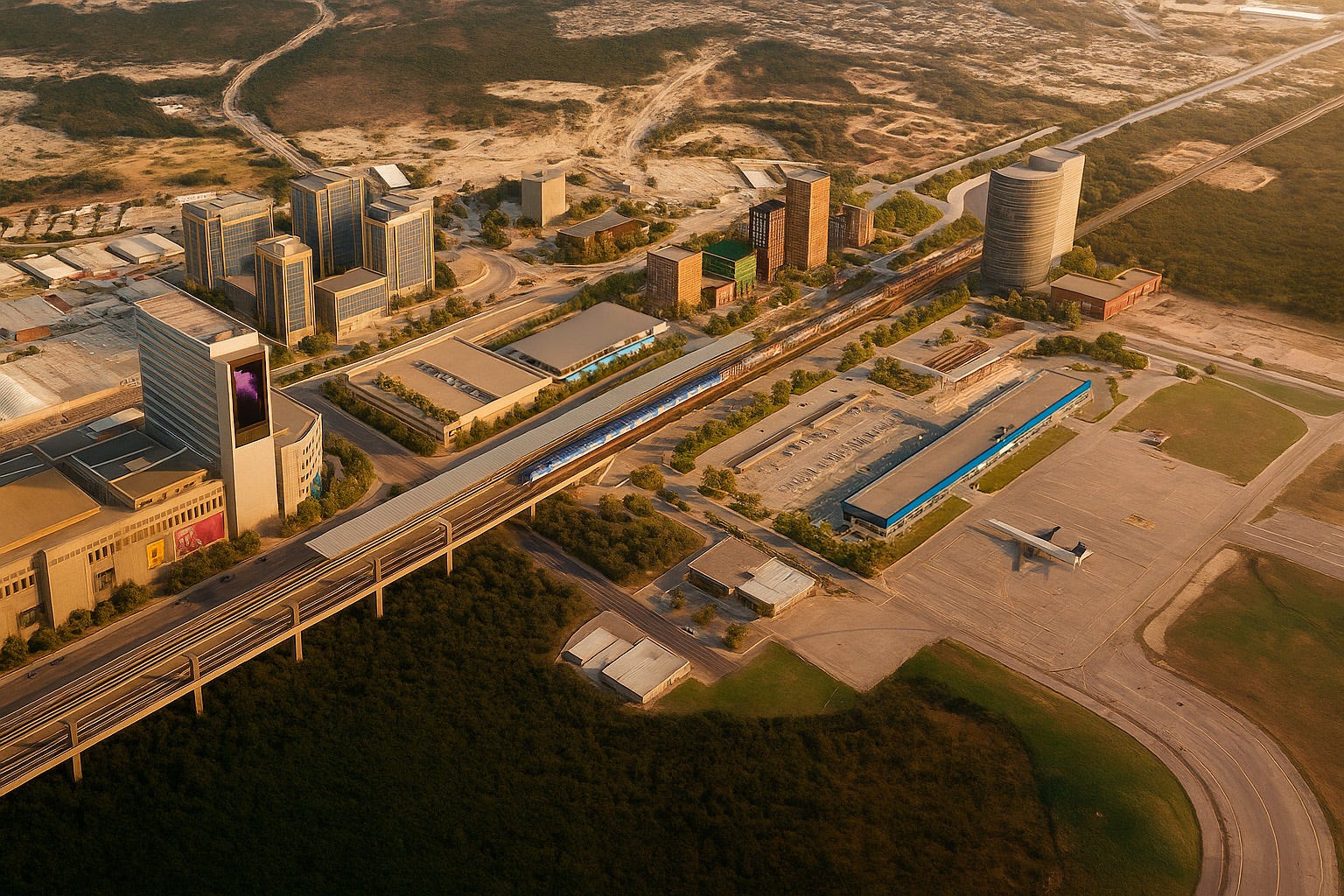
We would start with something modest and fitting for the size of the city: a satellite campus of the state university focused on business programs and continuing education; a small shopping mall; office spaces; hotels; and some mid-rise residential complexes. Together, these would create a dynamic neighborhood around CETRAM Campeche and drive even more ridership into the system.
All of this would give Campeche a significant strategic and competitive advantage over other Mexican cities of its size, punching well above its weight.
The region-wide impact and replicability
Now imagine that similar, appropriately scaled projects were carried out in every city the Tren Maya passes through, or along some of the other federally funded passenger rail corridors. We would be seeing a completely different outcome than the one we have today.

Instead of an isolated train running through a struggling region with minimal impact, we would have an integrated and productive region articulated by a rail corridor, one capable of supporting higher frequencies thanks to genuine network integration and the economic opportunities it creates.
Yet the failure doesn’t rest solely with the national government. State and municipal governments are equally culpable, all of them consistently failing to harness the real potential of these kinds of projects.
Back to reality
So instead, what we got were mediocre projects (and heavily subsidized), mismanaged investments, and a massive lost opportunity.
An expensive and underperforming BRT dressed up as an LRT. A train station in the middle of nowhere. A fragmented urban mobility system.
High investment, minimal impact.
I do believe Mexico can do better. We need a planning and long-term visioning culture to truly transform our cities.
Changing the direction
What does it take to head in a different direction?
Not politicians or political parties, but capable, autonomous, and well-funded institutions. It’s the only way to coordinate present projects within a larger long-term plan. We need to stop making decisions aimed at cutting a ribbon in three or six years, constrained within a single political term.
That, to me, is where Mexico’s real challenge lies, and what could actually change the direction the country is headed.
Examples in Latin America? There are several. Santiago de Chile comes to mind: without much fanfare, through slow and steady building, it has created one of the largest urban rail networks in the region. But that’s a story for another post.
I’d love to hear from you, what’s your take? Do you agree? Disagree? Let me know in the comments below.