

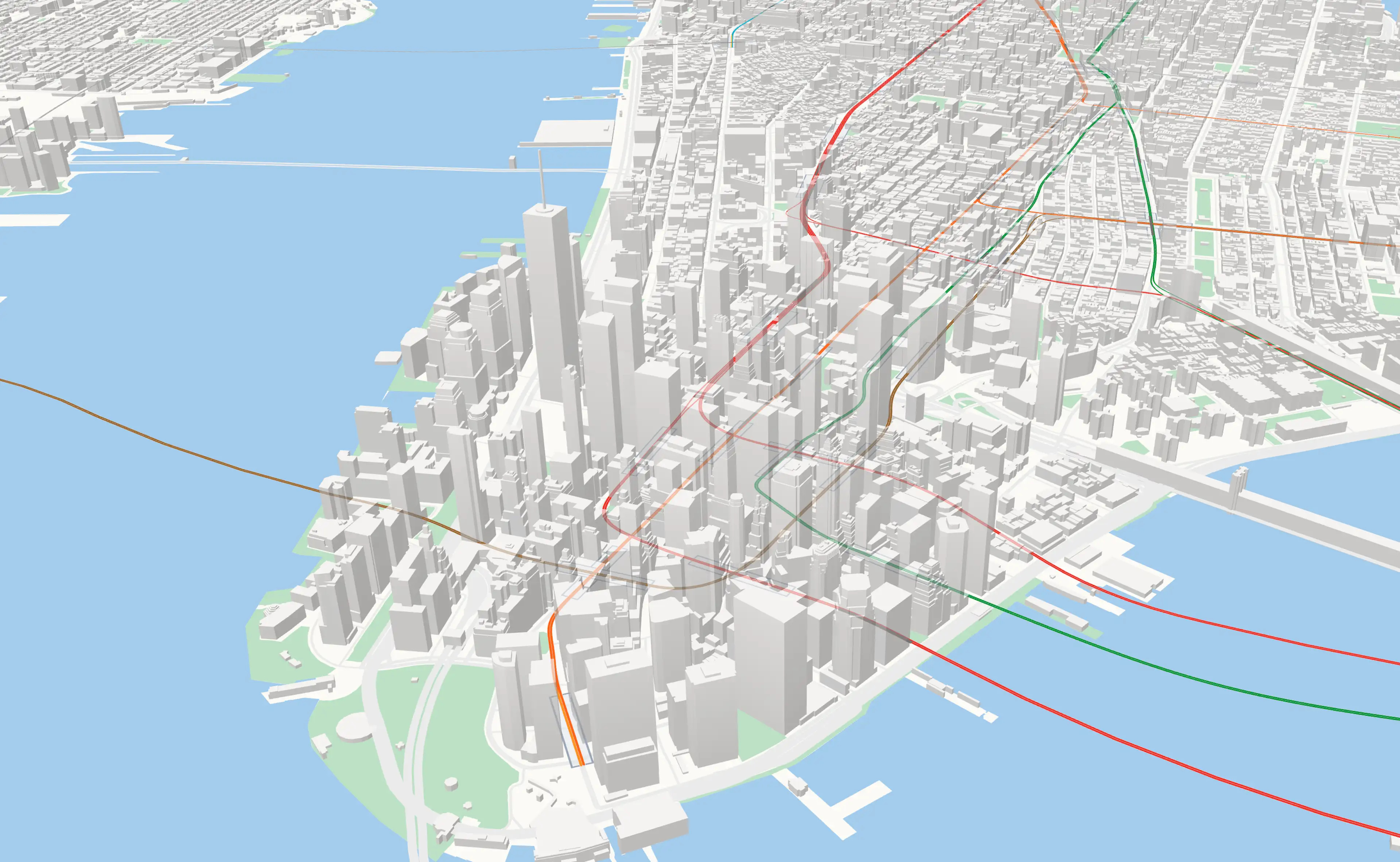
How would a $3 billion investment, built at Mediterranean construction prices, reshape your city’s transit system?
The answer isn’t straightforward, but here’s one thing I can tell you right away: you’re not turning any Sunbelt city into Tokyo anytime soon.
I’ve been playing the simulation game Subway Builder lately — for an ungodly amount of time, to be honest.
For those unfamiliar, Subway Builder is a new game developed by Colin Miller that puts you in charge of planning a subway system in any of 23 American cities. Since its initial beta release, the game has seen several improvements and keeps getting better. Overall, a great use of thirty bucks.
The game isn’t just fun, it also offers surprising insight into what it actually takes for a city to build great mass transit, or how easy it is to fail and go bankrupt trying.
So, why does the title say urban planning and not transport planning?
Well, that takes us to my first lesson.
1. The city’s development patterns shape the potential for mass transit
In normal mode, you start the game with $3 billion in the bank — but how far that money goes depends mostly on the city itself. What do I mean by that?
Let’s compare two similarly sized metro areas: Philadelphia (6.2M) and Houston (7.1M).
As a benchmark, I built a fully underground heavy-rail line (level –5 for all stations) and kept the default fare of $3.00 in both cases.
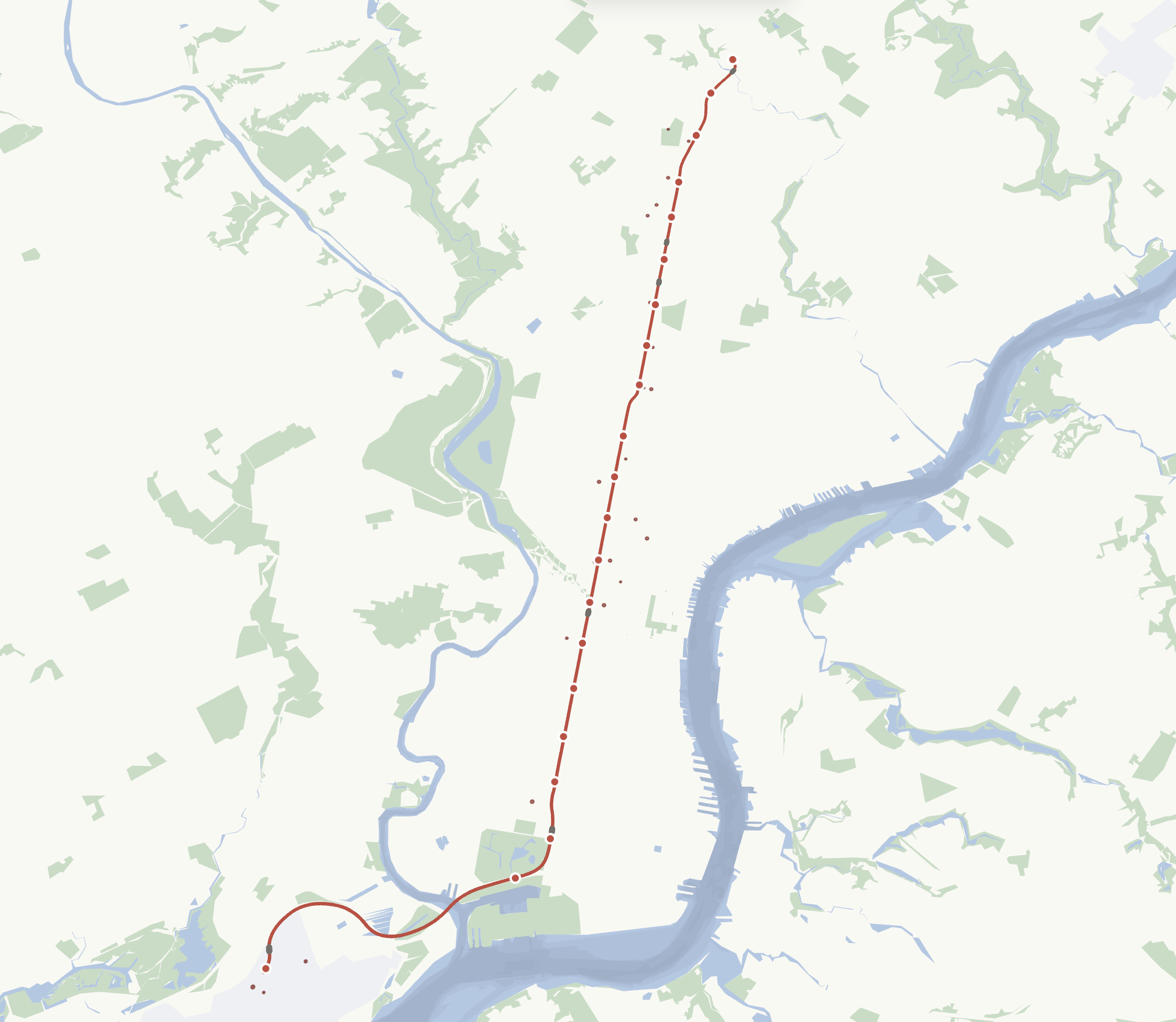
In Philly, a strong north–south corridor managed to reach:
over 75,000 daily trips
2.2% modal share
$32 million in daily profit
Meanwhile, in Houston, a north–south corridor with a westward branch, probably the lowest-hanging fruit in its current system, only achieved:
30,000 daily trips
0.8% modal share
$8 million in daily losses
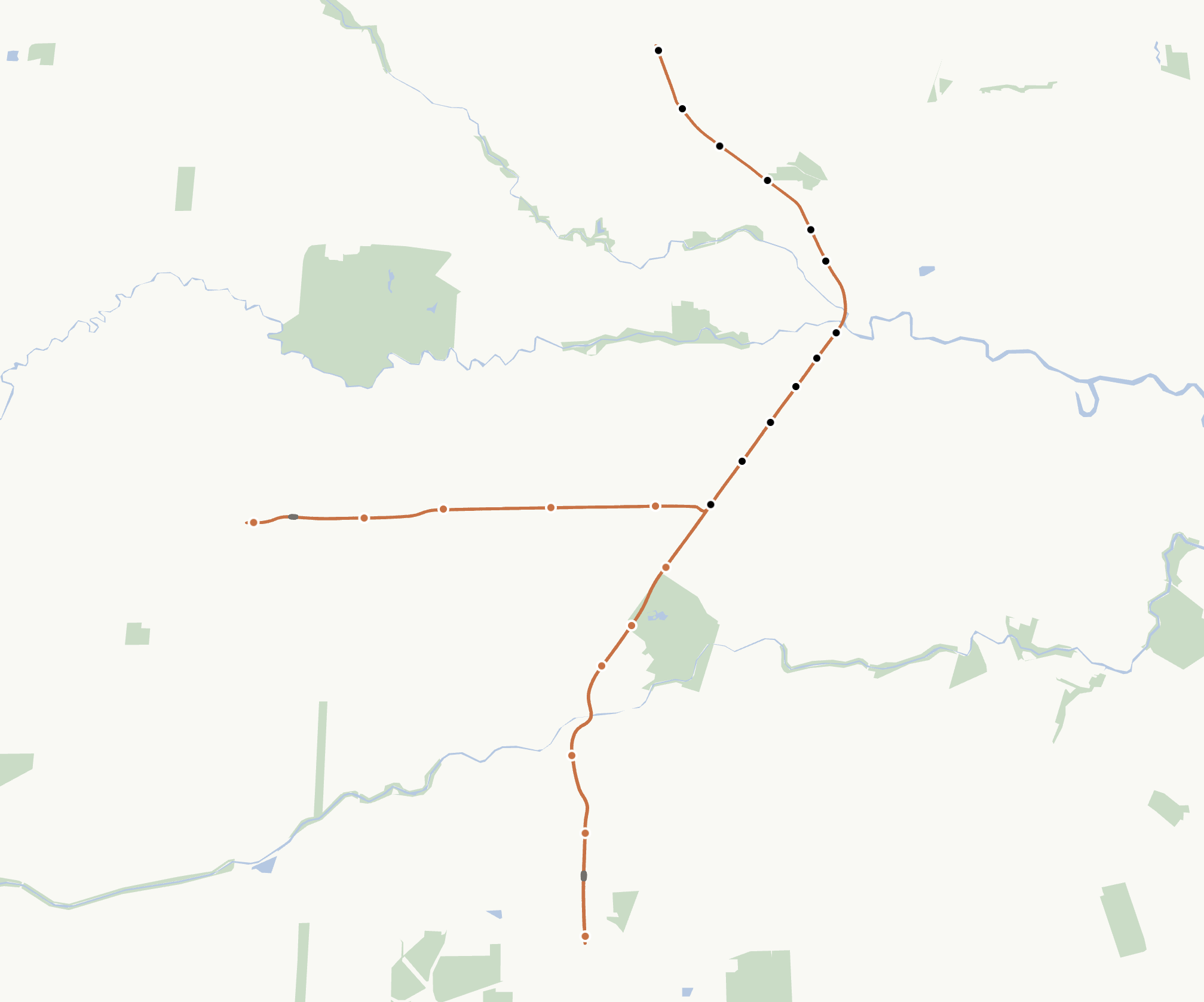
This shows you can’t escape a city’s existing development patterns. Those same $3 billion stretch much further in Philadelphia and could even justify future expansions, while Houston would struggle just to cover operations.
In real life, it’s a chicken-and-egg story. Development patterns and mass transit shape each other. You can’t have Houston without cheap oil and highways, or New York’s density without its historic railways and subway.
To end this lesson on a higher note: no city is doomed.
Not being able to support a subway today doesn’t mean you can’t have good transit. You can still design a great, efficient bus network, one that reshapes urban form and even creates the network effect needed to justify a subway someday.
Which leads me to my second point…
2. The network effect is real
Okay, let’s go back to our Philly run. We had a fairly successful north–south line.
What do you think would happen if we added a short east–west line?
If the east–west line existed in a vacuum, its ridership would be around 38,000 daily trips — nothing particularly impressive.
But if we run both lines together, total ridership becomes significantly higher than the sum of each operating on its own. How much higher?
North–South: 85,000 trips (+21%)
East–West: 53,000 trips (+39%)
Our combined ridership jumped from 100,000 to 138,000 daily trips — an overall increase of 38%. Even the transit modal share went up to 4.4%.
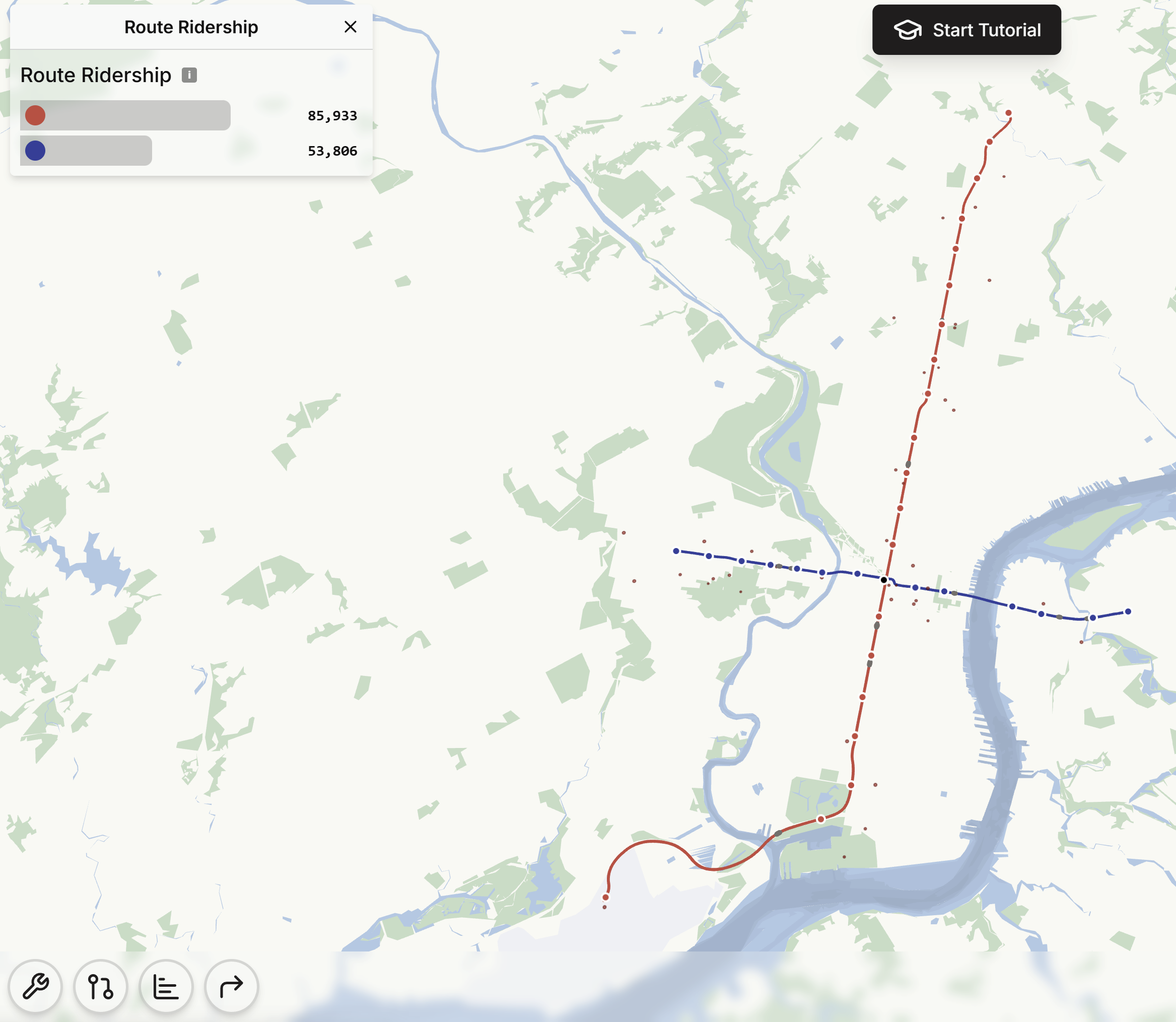
In other words, in transit planning, 1 + 1 ≠ 2. It’s more like 1 + 1 = 3.
That’s the network effect — and its true power.
The best part is that most cities can experience it even without a subway. A well-designed bus network can generate the same effect. That’s how cities like Toronto manage to achieve such high ridership with a relatively small subway system.
And there’s also another way to accomplish this with smaller investments: elevated light rail, which I’ll explain in the next point.
3. Elevated light rail is the way to go for most cities
Remember our $3 billion investment for the North–South line?
Well, the East–West line only required $850 million, and given that its ridership reached over 60% of the North–South line, it’s clearly a much better use of our money.
There’s also another key lesson here, one that’s not perfectly represented in the game, but incredibly relevant in real life.
As Jarrett Walker says, frequency is freedom, and a light metro makes it far easier to maintain high frequencies across the system.
That’s crucial, because in most American cities, current development patterns simply can’t sustain a frequent heavy-rail network. A frequent elevated light-rail system, however, is an entirely realistic possibility.
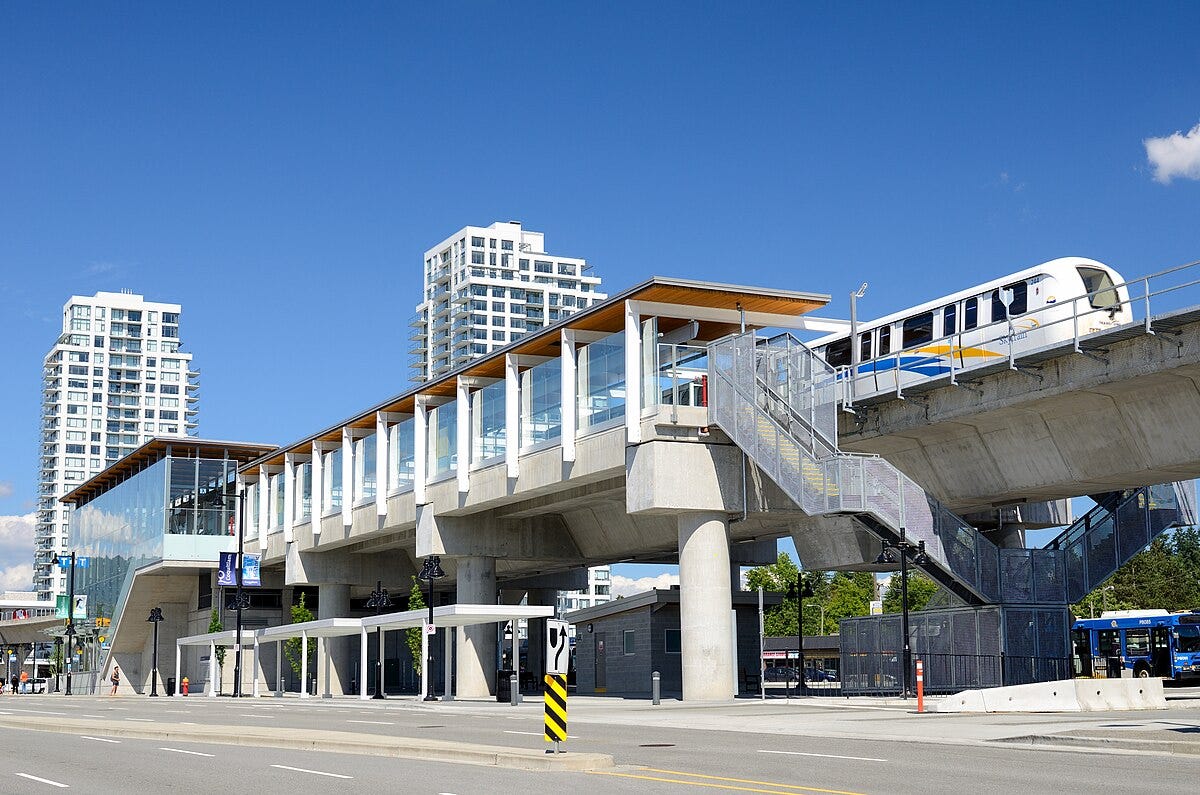
And with in-game construction costs (0.8× for elevated vs 1.0× for cut-and-cover tunneling), you can build roughly 25% more subway for the same budget.
If that were true in real life, wouldn’t you be in favor of elevated rail?
Of course, building great transit isn’t just about spending smart, it’s about avoiding dumb, expensive mistakes.
Which brings us to the next point.
4. Improvisation is expensive, plan beforehand!
This happens more often than I’d like to admit, and not just in the game, but in real life. It’s surprisingly common for transit agencies to launch projects without a master plan or a broader vision for where the network should go.
Take my hometown of Guadalajara, for example. With three light-metro lines and two BRT corridors, there are nine interchange stations in total, and I’d say only three are truly decent.
The rest involve long walks, endless staircases (some uncomfortably narrow), and even having to exit the station and cross huge intersections. Not great.
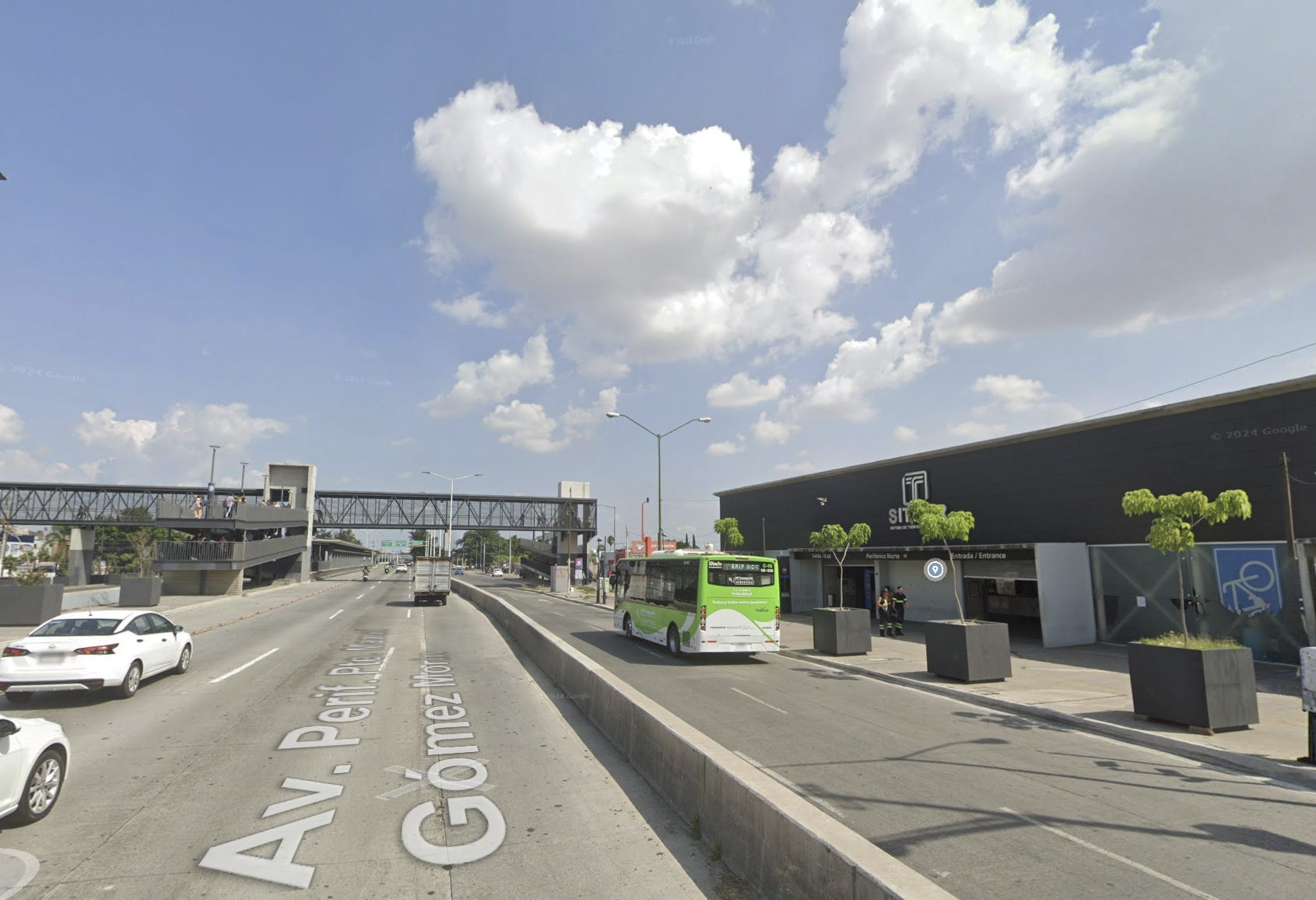
And that happens a lot in Subway Builder too.
If you don’t have a clear idea from the start of how many lines you want and where they’ll intersect, you’ll end up with costly deep-bore tunnels, awkward curves, or overly circuitous routes, all of which, in real life, would make construction far more complex and expensive.
In the game, it’s mostly fine, but in real life, it’s not.
When you’re working with a limited budget (and there’s almost never a reason to overspend), or trying to justify tax dollars to the public, you can’t afford to tell people they’ll need to climb three staircases and walk 800 feet just to transfer lines.
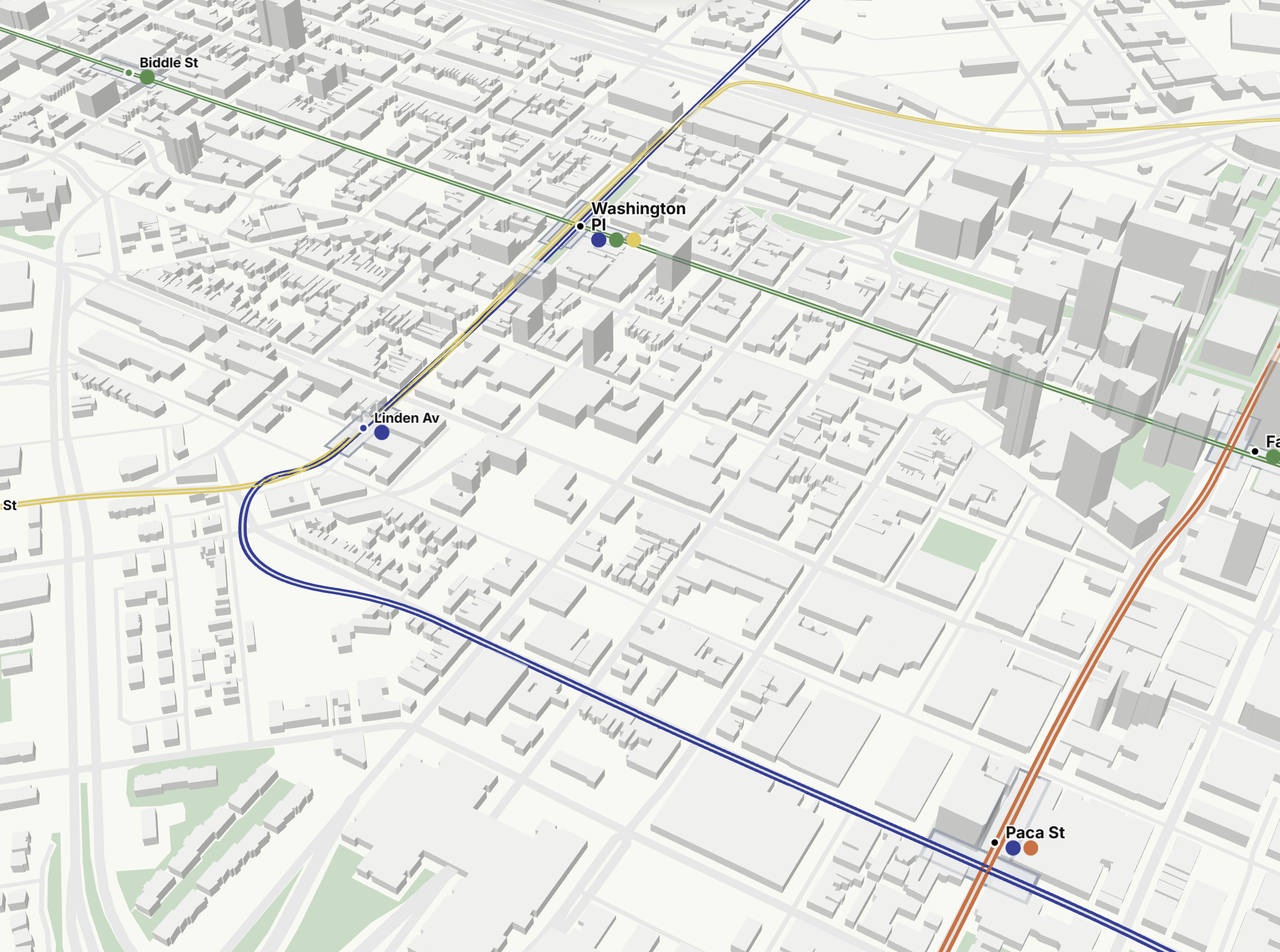
It’s always better to plan ahead, even for expansions that might never happen.
You might spend a little less today, but you’ll save yourself a lot of trouble down the line.
On that note, though, there are times and places where spending a little more actually makes sense.
5. Real state prices shape transit - Demolitions
Usually, you’d want to avoid demolitions, right?
But it really depends on the city, the location’s centrality, and local real estate prices.
When you’re tunneling under Midtown Manhattan, demolishing a couple of towers could cost more than a small line extension.
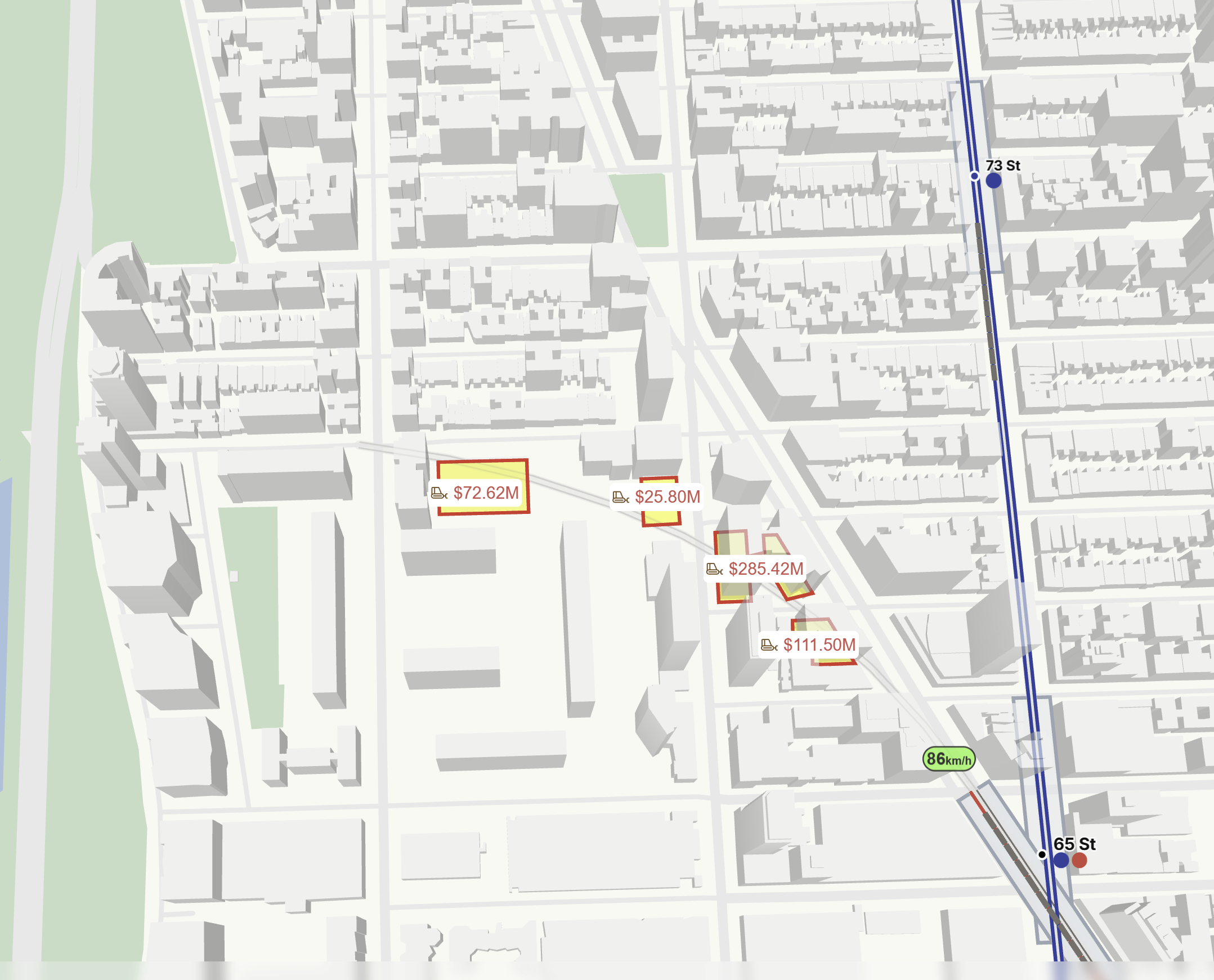
But in Dallas, tearing down a few houses to create a wider turning radius, thus achieving higher operating speeds, might be little more than a rounding error.
Ironically, it’s often that first scenario, the expensive one, that can actually support successful transit.
So, choose your poison.
And speaking of geography…
6. Job density and job centralization are fundamental
When we talk about density in urban planning, we usually mean population density.
However, job density is just as important, and in some cases, even more so.
A strong central business district drives trips across the entire metro area, especially when compared to jobs scattered at low densities along highways. That’s something Canadian cities tend to do far better than many American ones.


This is why it’s a real problem when companies move their headquarters to suburban campuses or edge towns, they’re almost impossible to serve with high-quality mass transit. Cities should actively work to prevent that trend.
The ideal scenario is having residential density (trip origins) and job density (trip destinations) aligned along the same corridor.
That’s what makes route planning for high ridership so effective.
And that’s something I always emphasize when talking about Transit-Oriented Development (TOD): it’s not just about living close to transit, it’s also about working and going places close to it.
There are a few final points I’d like to highlight.
Bonus. It’s only fun because of Mediterranean construction costs.
It’s no secret that construction prices across the U.S. are through the roof.
The Second Avenue Subway cost over $2.5 billion per mile, and at those prices, you can’t really build much of anything.
Bonus 2. New York plays in its own league
Playing Subway Builder in New York quickly shows just how deeply the city is shaped by transit, and how much easier it is to run profitable lines and finance expansion.
No other city even comes close.
Cities like Chicago, Boston, D.C., and San Francisco all have respectable ridership potential, but New York simply plays in its own league.


Final thoughts
There are plenty of lessons to take from the game, but we also need to remember the oversimplifications that make it work. There’s no public opposition, construction is instantaneous, and the game doesn’t simulate non-work trips, among other things.
That doesn’t make it a bad game; it’s a simulation, and still, a surprisingly insightful one.
While playing, I kept thinking back to two of my main references in transit planning (even though neither focuses on subways):
Human Transit, by Jarrett Walker
Better Buses, Better Cities, by Steven Higashide
Finally, this wasn’t an exhaustive list of things learned, but if you enjoyed it and want to see more, leave a comment, subscribe, and share, maybe I’ll do a part two.
I’d also love to hear your thoughts on this: whether you agree or disagree, or if there’s something I might have missed.
What if you had a payment of 50% increase in land value of any location within 1/2 mile of a station and a legel right to buy any undeloped land at what is value was before the system was made public?
Great piece! I have been on the fence about buying this game because I'm trying to decide how my gameplay would be nuanced from what I've seen from others. I'm hoping to use these as guardrails so I don't end up having to learn them the hard way and get too frustrated. However, I suppose maybe that's the whole point of simulating these runs.